)
)
)
)
)
Edge12 Dec 2025
Running on Clouds: The Story of On
The story of how a Swiss runner's pursuit of a new running sensation became On, aiming to be the most premium global sportswear brand worldwide.
At the beach, in the city, at the hospital, or on the runway, Birkenstocks can be spotted everywhere, worn by just about anyone. What most people don't know is that the German company's roots trace back to 1774, and that for much of its history, it was known not for shoes, but for orthopedic insoles. It took nearly two centuries before that insole became a shoe of its own. Once it did, decades of rejection for its unfashionable look eventually gave way to collaborations with some of fashion's biggest names. The sandal itself never really changed, only the world's perception of it.
We begin this story in 1774, in the German village of Langen-Bergheim, just outside Frankfurt. There, the earliest known record of the Birkenstock family's profession can be found in the archives of the local church. Johann Adam Birkenstock is listed as a shoemaker, marking the first documented link between the Birkenstock name and the craft that would continue for generations.
For more than a century after that entry, the Birkenstock family remained ordinary cobblers, making shoes for the local population and largely existing outside historical records. It might have stayed that way had it not been for Konrad Birkenstock. Born in 1873, he showed an early interest not only in making shoes, but also in how footwear affected the human foot.
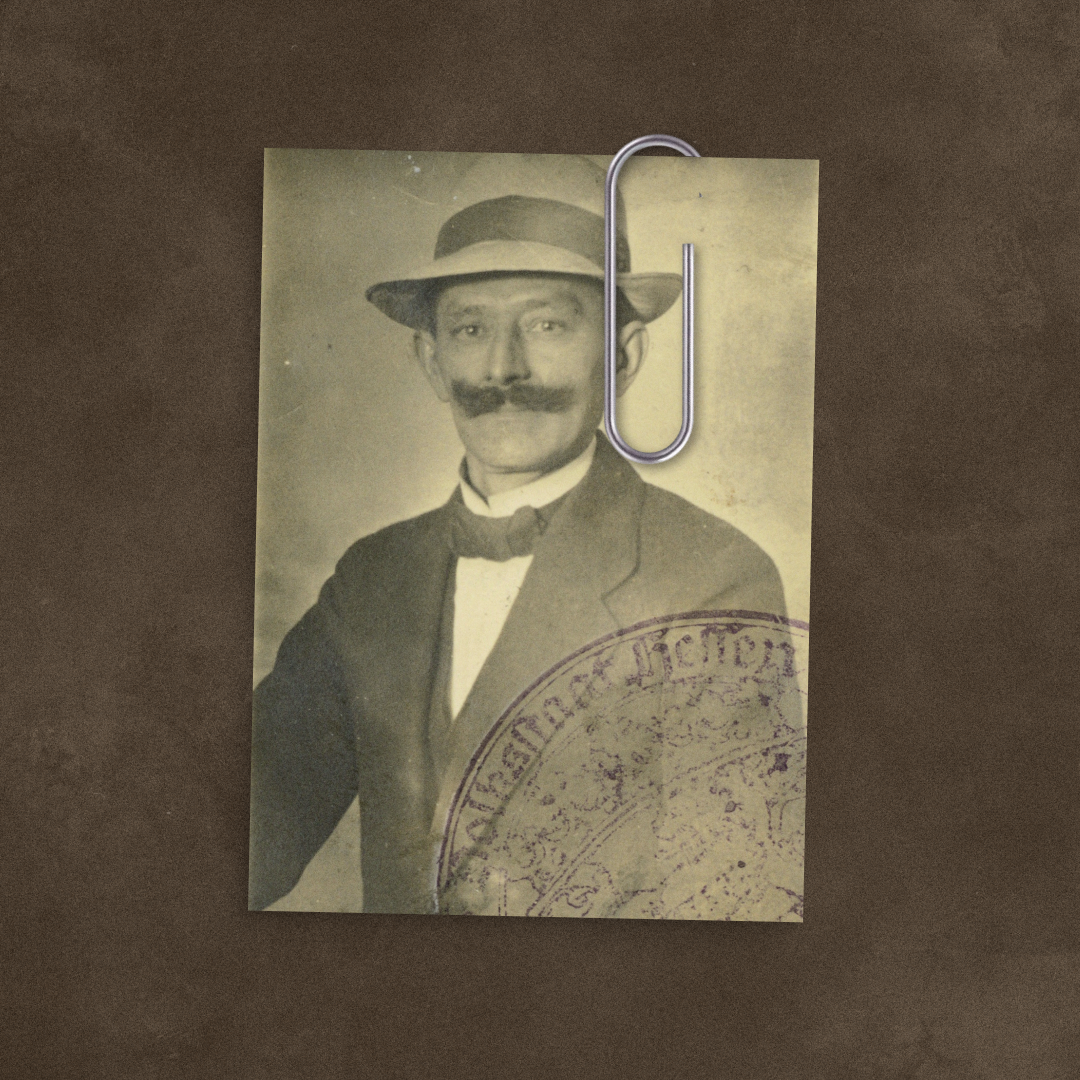
In 1896, he moved to Frankfurt am Main and opened an orthopedic workshop. At the time, most shoes were simple compared to what we're used to today, built without arch support or cushioning. The few insoles that did exist were made of rigid metal, not offering the comfort Konrad had in mind. Setting out to solve this problem, he began crafting a contoured insole made from cardboard and leather that supported the foot's natural shape.
Through the early 1900s, he began experimenting with different material mixtures, constantly seeking ways to improve his designs. By the 1910s, his insole consisted of rubber, tar, and, notably, small amounts of cork that helped improve flexibility while keeping it light. Medical circles had long prescribed rigid metal insoles for treating foot pain, with flexible footbeds struggling to gain acceptance.
In 1914, however, German orthopedists formally recognized the insoles as orthopedic remedies, confirming what Konrad had long believed. He had already begun referring to his innovative insole design as “Fussbett,” German for footbed, but it was not until 1925 that he finally secured a trademark for the term. One of the modern Birkenstock's foundations had, by that, been established.
By 1915, Konrad Birkenstock had moved to Friedberg, a small town north of Frankfurt, where he established the first facility for machine production of Fussbett insoles. The insoles were inserted into existing shoes, but they had to be professionally adjusted to work as intended. If fitted incorrectly, they would be uncomfortable and fail to provide the necessary foot support, causing the very effects Konrad had dedicated his professional life to combating. Because much of the business depended on proper fitting, Konrad began holding lectures for cobblers.
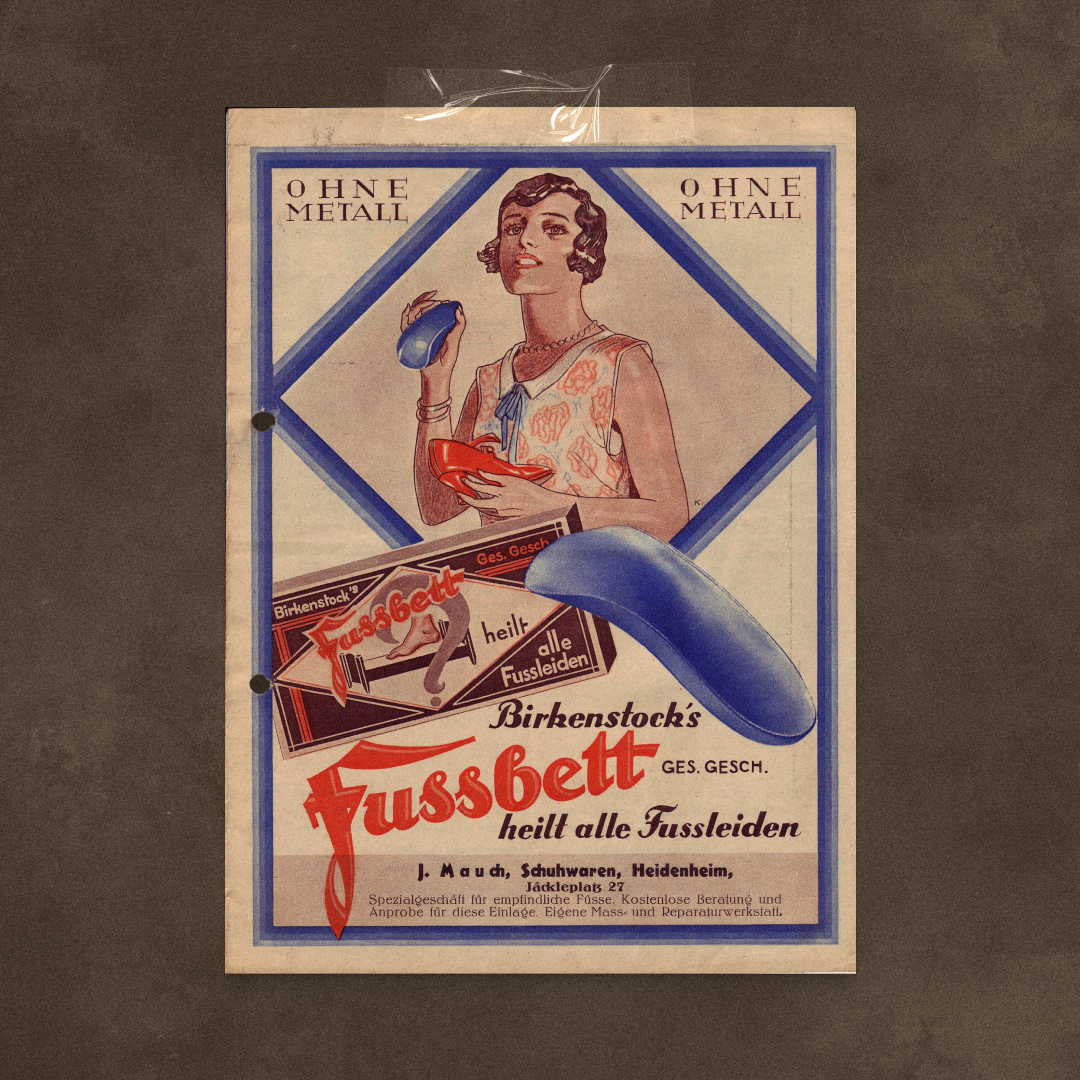
These lessons became central to the Birkenstock approach. One of his sons, Carl Birkenstock, joined the family business at an early age and would, over the following decades, turn his father's teachings into a strict principle. Mandatory courses became a constant feature as the company committed to only selling footbeds to cobblers who had learned to properly fit the insoles.
Throughout the 1930s, Carl traveled across Germany and beyond its borders, educating thousands of professionals to ensure that the fittings were carried out precisely as they should. In the process, he became the public face of the business, which had by this point expanded to eleven European countries.
This period laid the foundation for a philosophy the family called "Naturgewolltes Gehen," translated as natural walking. The idea was simple: footwear should support the foot's natural function and recreate the conditions of walking barefoot on softer surfaces.
It eventually became the subject of an entire textbook as Carl published Podiatry: The Carl Birkenstock System, which would go on to become one of the defining texts on foot health of the era. The philosophy around “Naturgewolltes Gehen” still guides how the company develops its products today, with function and quality as the North Star.
During the Second World War, the business grew modestly. Total sales had by this point reached roughly 300,000 units, partly driven by private orders from injured soldiers seeking relief from foot pain after spending long hours in ill-fitting boots.
After the war, Carl moved the operation to Bad Honnef, near Bonn, where the demand continued as more soldiers returned home. Even so, the company remained small, explained largely by the fact that distribution was limited by the pace at which the company could train new professionals. Also, its very purpose narrowed the product's appeal as people tend to buy insoles only when they experience pain, rather than to prevent potential pain.
About a decade earlier, Carl's years conducting the fitting courses and visiting shoe conferences had sparked an idea. Instead of an insole that had to be placed into an existing shoe, why not build the shoe around the insole from the start? In 1936, he patented the concept as the “ideal shoe,” and produced hundreds of pairs himself.
Over the following decades, in pursuit of bringing the ideal shoe into mass production, Carl collaborated with several German shoe manufacturers, but none produced the results he was seeking. The quality and functionality fell short, while the production process itself proved too complex. In 1961, he retired and spent the rest of his life continuing to write books on foot health.
Get curated quality company deep dives every other week.
In 1954, a few years before his father's retirement, Karl Birkenstock joined the business at the age of 18. He would soon be the architect of Birkenstock's most important breakthrough. Instead of trying to produce shoes with embedded insoles tailored to each individual, he set out to standardize the footbed itself, which would significantly simplify both mass production and distribution. By 1962, he had found his solution.
Karl presented the result the following year at the Düsseldorf shoe fair, marking the beginning of the family's shift from orthopedic customization to a broader consumer product. The "Original Birkenstock Footbed Sandal" featured a refined version of the footbed made from a mixture of cork and latex.
It had a built-in heel cup to stabilize the heel and support the natural arch of the foot, along with a slightly raised toe bar to improve grip. The cork layer softened and molded to each foot over time, while a single wide strap across the top secured the foot in place. In 1979, the sandal was renamed the Madrid, and it remains in production today, essentially unchanged.
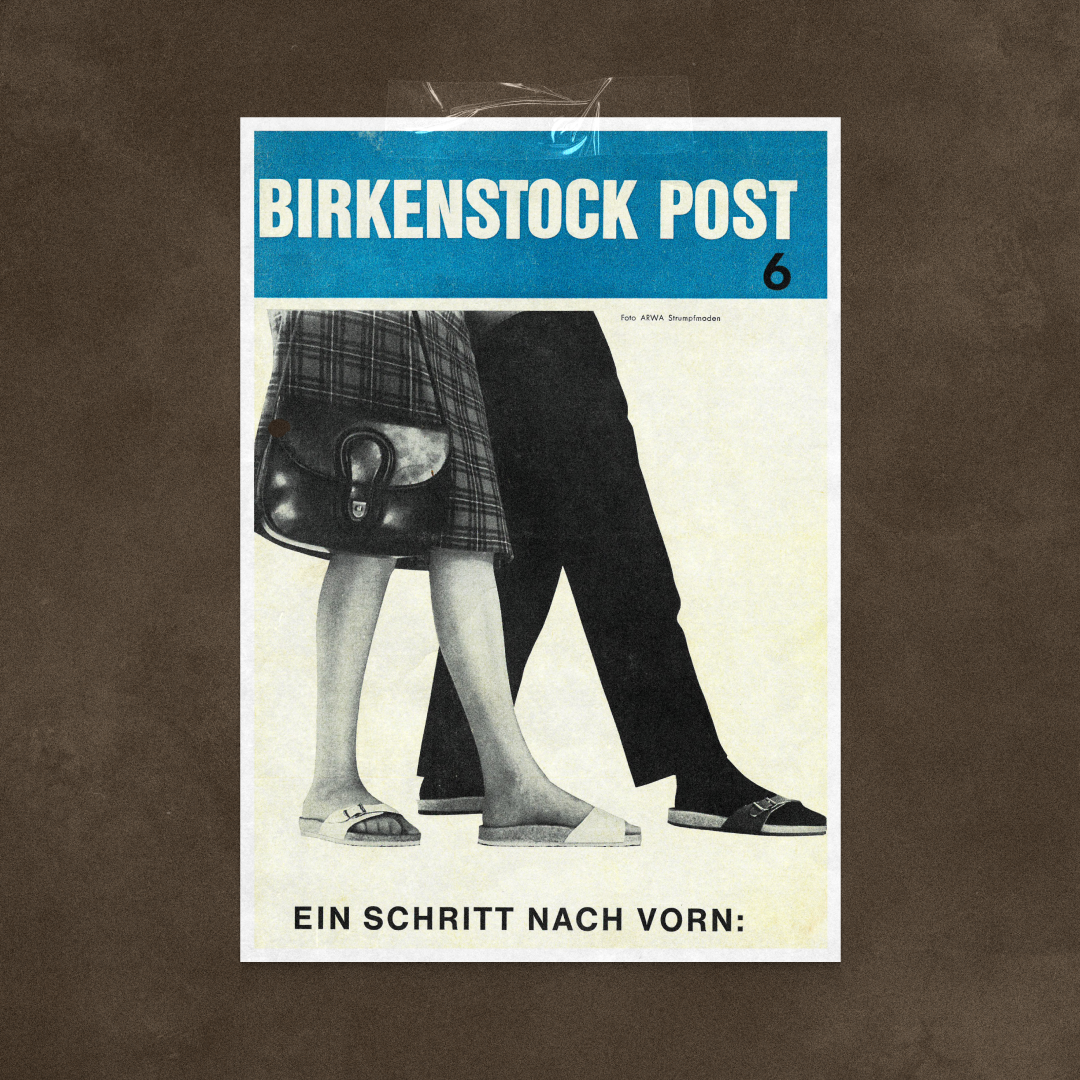
Ideally, the market launch following the shoe fair would have been an immediate success, but that was far from the truth. In an era of slim Chelsea boots and, later, bold platform shoes, Birkenstock's broad, utilitarian sandal looked plain and outright unfashionable by comparison. Understandably, German shoe retailers were reluctant to stock it. Through the 1960s and 1970s, Birkenstock would remain associated with orthopedic use and health clinics, still far from the mass-market product Karl had envisioned.
For as long as the Birkenstock family had made shoes, it had been primarily focused on Germany before expanding to other European countries. That began to change in 1966, when Margot Fraser, a German dressmaker living in the U.S., returned to her homeland on a visit. While staying at a spa, she was advised to try a pair of Madrid Birkenstocks for her foot pain and was struck by how good they felt and what the sandal did for her feet.
Fraser was so impressed that she brought a few pairs back to California. But it didn't stop there. Not being able to shake the feeling that everyone would want a pair of Birkenstocks, she wrote to the Birkenstock family asking to become their American distributor. After months of discussions, they eventually came to an agreement, and in 1967, Fraser established Birkenstock Footprint Sandals Inc.
Her first challenge was convincing retailers across the state to put the sandal on their shelves. Fraser began approaching store after store but was rejected almost everywhere she went. The response echoed what Karl Birkenstock had already encountered in Germany: conventional retailers did not believe there was a market for the sandal.
On the suggestion of one of Fraser's friends, she displayed the Birkenstocks at a health food convention in San Francisco. The demonstration became a turning point for the company's positioning in the U.S. During the years that followed, health food store owners began stocking the sandals alongside granola and vitamins. For roughly the first six years, they remained her only customers.
Many of the people who bought the sandals in these stores were part of the American counterculture of the late 1960s. While much of the movement centered on consuming less, the products people did buy emphasized utility, were made from natural materials, and stood in contrast to mainstream taste. As it turned out, the brown sandal fit that world unusually well.
While California saw gradual expansion, product development continued back in Germany. The Madrid alone hadn't delivered the breakthrough Karl had hoped for. But he never lost faith in the idea and kept expanding the original footbed into a broader range of sandals. The Roma arrived in 1965, the Arizona in 1973, the Boston clog in 1976, and the Gizeh thong in 1983.
Many of these models would eventually become some of Birkenstock's most iconic and recognizable products. As of its 2023 IPO filing (sourced through Quartr Pro), Arizona, Boston, Gizeh, Mayari, and Madrid together accounted for nearly two-thirds of sales.
Around the mid-1970s, some of the aforementioned models had made their debut on the U.S. market. The Arizona became particularly popular, attracting a broader customer base and leading Fraser to expand distribution through additional stores.
Although the sandals were still considered to be everything from eccentric to downright ugly in the eyes of mainstream fashion, they had found a growing following among people who spent long hours on their feet, such as nurses and restaurant workers, for whom comfort mattered more than aesthetics.
During these years, part of the California tech scene also discovered the sandals. A young Steve Jobs famously adopted a pair of Arizonas as part of his uniform during Apple's formative years. Decades later, in 2022, a pair of his battered brown Birkenstocks, still holding the imprint of his feet, sold at auction for more than $200,000.
Fraser had long been advocating for introducing the sandals in different colors but was met with skepticism. One European distributor didn't hold back: "This woman is going to ruin us. We are orthopedic – we don't need color."
But Fraser held her ground, and eventually, beginning in the early 1980s, the color selection started to expand. Sales followed as consumers could choose from tan, black, white, crimson, gold, as well as the original brown. It was the first sign of Birkenstock saying that form (to some extent) could coexist with function.
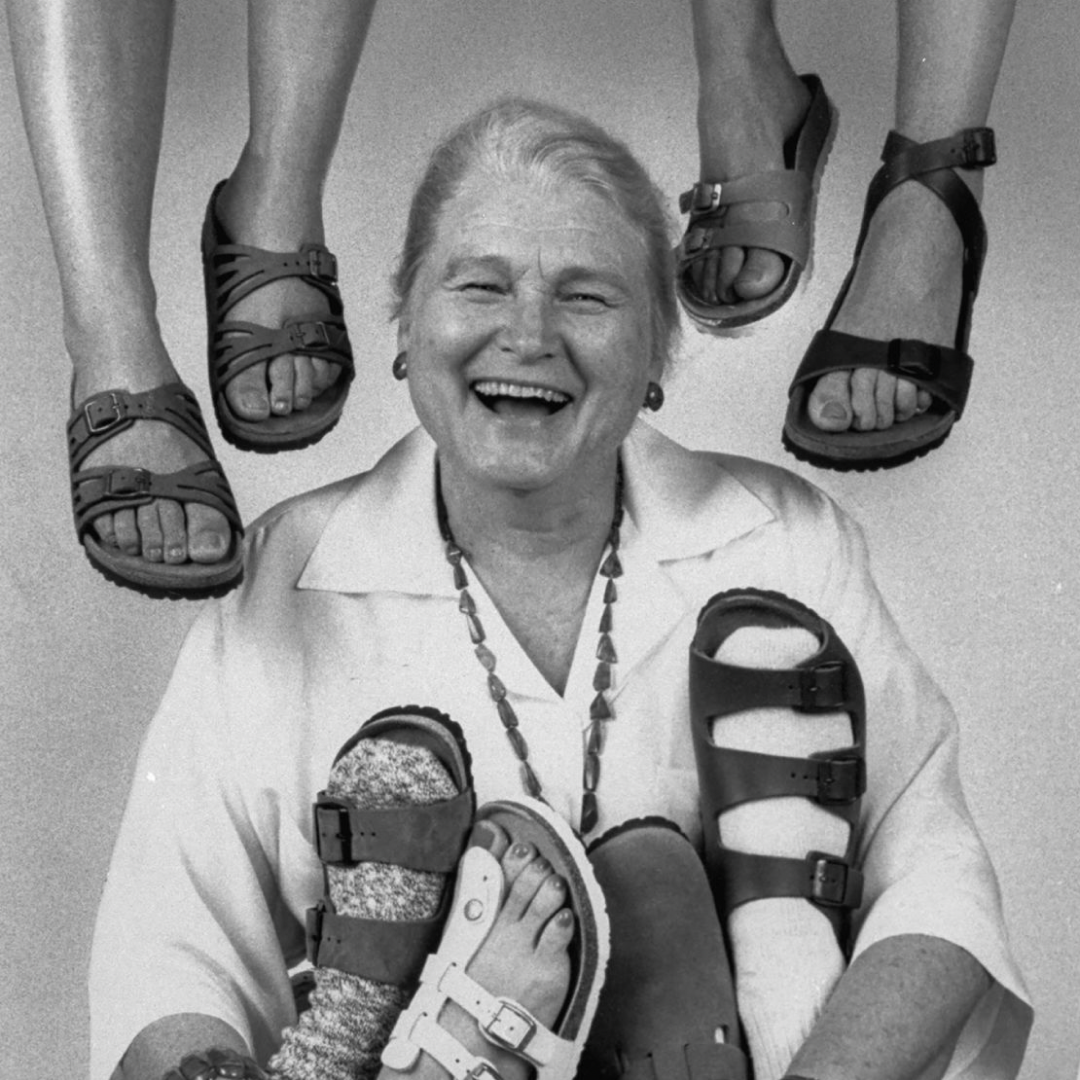
While color expanded the sandal's appeal, the biggest breakthrough thus far came in 1986. Nordstrom became the first large department store to sell Birkenstock, marking a clear shift in how far the sandal had traveled from years spent merely on shelves at health food stores. What had started with Fraser's encounter at a spa had, by the 1980s, grown into Birkenstock's largest market.
Nordstrom's distribution drove greater demand, which brought more retail agreements, and in turn even more demand. For every year throughout the 1990s, the sandals appeared on more and more retail shelves. By 1997, Birkenstock U.S. was reportedly generating around $82 million in sales through more than 3,600 retail locations.
During the same era, the company expanded across Europe and into other continents, gaining ground in Japan and Australia, where the Birkenstock name had not yet been introduced. In many other European countries, where the insoles had already helped establish networks and relationships dating back to the 1930s, the sandals continued to expand through existing channels, allowing the company to reach a growing number of customers.
However, distribution mainly remained concentrated in orthopedic specialty shops and health-conscious retailers rather than mainstream shoe stores. These decades introduced the brand to more consumers who valued comfort and utility, but still saw the sandals for what they did rather than how they looked. That would soon begin to change.
In the 1990s, Karl Birkenstock began preparing the company for succession. He wanted his three sons – Alexander, Christian, and Stephan – to take over the business and divided the group into a growing number of companies and brands, giving each son his own area of responsibility.
Karl retired in the early 2000s and passed control to the next generation as planned. However, the reorganization didn't go as planned, and fragmentation left the succession anything but smooth. The subsidiaries, which at one point consisted of 38 legal entities, had begun pursuing different strategies, leading to conflicts over pricing, distribution, and product development. As a result, tension within the family had also started to build, making coordination increasingly difficult.
On the other side of the Atlantic, Fraser sold Birkenstock U.S. to its employees in 2002, closing out nearly four decades of importing sandals for Americans. A few years later, the distribution company was folded into the German parent company, marking the first step toward a more centralized organization.
By 2009, the brothers had realized that the situation had become unmanageable, and that the company needed outside help. Through mutual friends, they were introduced to Oliver Reichert, who joined as an external consultant. In 2013, he took over as Birkenstock's CEO, a role he has held ever since.
His background was quite unconventional. Before joining Birkenstock, Reichert had been a techno club owner, a war correspondent, and a managing director of a sports television channel. He had worn Birkenstocks since childhood but had never worked in the shoe industry. As Reichert would later put it in the company's 2023 IPO filing: "Sometimes it takes an external perspective to get things right."
His first task was to untangle the corporate maze that the company had evolved into. By 2013, that had been replaced by a single BIRKENSTOCK Group, organized around three divisions: production, distribution, and services.
The company remained fully family-owned, though over these years the ownership had shifted from three Birkenstock brothers to two, with operational control handed to outside management. It was a step in the right direction, but Reichert believed that family ownership would not be the company's long-term solution, and began exploring alternatives. It would take a few years, but eventually he would find precisely what he was looking for. We'll return to that later…
Together we will provide support to the business so it can fully realize its significant growth potential.
By the early 2000s, Birkenstock was finding success in the U.S. while expanding across markets around the world. At the same time, designers began showing increased interest in products built around authenticity. Birkenstock, as it turned out, naturally aligned with that movement. While celebrities had been seen wearing its sandals during the 1990s and early 2000s, it was not until 2012 that the most consequential fashion endorsement came.
Phoebe Philo, one of the most influential fashion designers of the 21st century, sent a pair of fur-lined Arizona-inspired sandals down the Céline (owned by LVMH) runway in Paris. What was initially dismissed as a joke soon proved to be the beginning of a gradual shift in how people perceived the sandal. One that would accelerate over the following decade.

Birkenstock had never thought of itself as a fashion company. Its identity was built around the footbed and orthopedic credibility, with function always taking precedence over design. While the company had expanded its range of color schemes, the majority of its shoes remained in neutral, often earthy, tones.
As designers and luxury labels became increasingly interested in the brand, Birkenstock had to decide how to engage with the fashion industry without diluting what had made its products distinctive in the first place. Reichert's answer was to embrace the opportunity, but carefully. He remained strict about preserving Birkenstock's brand positioning and, most importantly, ensuring that the footbed itself did not change.
The company began producing its own fur-lined Arizona variants, similar to what had appeared on Paris runways. In the years that followed, the brand launched a series of selective collaborations with luxury and streetwear brands. The approach was formalized in 2019, when Birkenstock established a Paris-based unit to oversee its premium partnerships, named 1774 after the company's founding year.
Since then, the unit has taken the brand through one premium collaboration after another. In 2019, Birkenstock collaborated with Valentino (minority owned by Kering), unveiling a reinterpreted version of the Arizona at Paris Men's Fashion Week. In 2021, Rick Owens reworked the Arizona, Boston, and Rotterdam in his signature all-black aesthetic. Early in 2022, Dior (owned by LVMH) previewed the Tokio mule and Milano sandal, which later retailed for around €1,000. A partnership with Manolo Blahnik followed, featuring a collection of velvet-and-leather sandals and clogs with crystal-embellished buckles that sold out within hours.
Through these collaborations, it had become perfectly clear that Birkenstock no longer appealed only to hippies, German dads on vacation, and the health-conscious, but to a broad spectrum of consumers.
Crucially, the collaborations have elevated Birkenstock's status without altering its core market positioning. This is a familiar playbook in consumer brands: limited-edition, high-status collaborations can elevate the perception of a much larger-volume product. A customer buying a regular pair at Nordstrom was now buying into the same brand universe as Dior and Manolo Blahnik, even though the price point remained entirely different.
A pair of 1774 editions generally retails at around €500, and collaborative releases often stretch beyond that price range, but a pair of original Arizona Birkenstocks still sells for roughly €100, well within the mass-market price range. Changing the materials, colors, and finishes allows Birkenstock to capture attention without sacrificing its brand image and becoming fashion-led. That's what makes Birkenstock unique within the shoe industry. For decades, the core design has remained largely unchanged, and the product is what it has always been: orthopedic.
In the summer of 2023, Barbie was one of the most talked-about releases and eventually also became the highest-grossing film of the year. In one noteworthy scene, Margot Robbie's Barbie must choose between pink stilettos and a pair of brown Birkenstock Arizonas. The sandals later appear in pink, symbolizing her choice between remaining in Barbie Land or stepping into the real world. It wasn't a paid placement, which makes the moment more revealing.
Birkenstock had already gained fashion credibility through its luxury collaborations, but Barbie showed that the brand had become recognizable enough to serve as a cultural symbol on the big screen. In the week after the film's release, Google searches for women's Birkenstock rose by several hundred percent in the U.S. and U.K.
A few years before Barbie, in February 2021, Reichert finally found an ownership structure that matched his vision and won the brothers' approval. L Catterton, the LVMH-backed private equity firm, acquired a majority stake in Birkenstock, with Bernard Arnault's family investment company, Financière Agache, joining as a co-investor.
The transaction valued the company at about €4 billion. The Birkenstock brothers stayed on as minority shareholders, Reichert remained CEO, and L Catterton took seats on the supervisory board.
“Birkenstock was founded nearly 250 years ago and has grown to become one of the few iconic brands in the footwear industry. We truly appreciate brands with this long heritage [...] Together we will provide support to the business so it can fully realize its significant growth potential.”
– Bernard Arnault, L Catterton's press release from the announcement.
The company had become the kind of brand that naturally appealed to Arnault's ecosystem: long heritage, distinctive products, tight control over manufacturing, and plenty of room left to expand its footprint around the world.
L Catterton clearly stated its ambition to fuel growth in China and India, alongside continued investment in Birkenstock's German manufacturing base. As Reichert put it, the new partners brought "unmatched expertise and international network of resources" to the table.
In October 2023, a little over two years after the acquisition, Birkenstock listed on the New York Stock Exchange. Following the offering, L Catterton retained roughly 81%, Financière Agache held 5.5%, and the remainder mostly represented the public free float.
Throughout its history, even as Birkenstock expanded beyond soles and ramped up shoe manufacturing, the company has kept its core production base in Germany. As of 2025, more than 95% of its products are assembled in its home country at its six manufacturing sites. In terms of materials and components, over 90% are sourced within Europe.
Birkenstock's signature footbed is built in layers. At its core is a thick mixture of cork and latex, supported by two layers of jute and finished with a soft suede lining on which the foot rests. The cork provides flexibility and cushioning, while the jute reinforces the structure and helps manage moisture. The cork itself comes mainly from Portuguese cork oak, much of it granulated from the by-products of wine cork production.
Using custom-built machinery, Birkenstock mixes, bakes, and molds the cork-latex compound through a production process it has refined over decades. Metal buckles are pressed into shape, polished, and washed before undergoing a heated lacquering process. The buckles are then mounted onto leather straps sourced mainly from Italy and Spain, forming the sandal's upper. Once the upper is glued to the footbed and sole, the Birkenstock sandal is complete. The process has remained largely unchanged for more than 60 years.
Beyond the signature sandal, Birkenstock has expanded into several new materials, all while keeping production in Germany. Ethylene-vinyl acetate (EVA), long used for the outsoles on its classic sandals, and polyurethane (PU) are now used to make new designs. Rather than being built layer by layer, these are molded in one piece. We'll return to these models later.
For a mass-market footwear company today, this level of local production and regional sourcing is unusual. During the past decades, much of the footwear industry has relocated its production to lower-cost countries such as China and Vietnam. Birkenstock instead emphasizes that its model protects product quality, labor standards, and control over the value chain. As Reichert put it in a 2019 Forbes interview:
"Our customers expect us to not only fulfill, but to set the highest standards in the industry when it comes to product quality, safe and fair working conditions, and sustainability. This is something that only works if you have full control over the whole value chain. And that's why 'Made in Germany' still means something to us."
That same commitment to quality shows up in how long the sandals last. According to the company, with proper maintenance, a pair can last for decades, as the outsoles, footbeds, and uppers can all be replaced individually. Third-party repair services purchase original components for this purpose, and some cobblers have built their entire businesses around restoring worn Birkenstocks.
All of this runs counter to how much of the modern footwear industry operates, in which products are often designed for a shorter replacement cycle. For Birkenstock, longevity is a foundational value.
The footbed remains, as it always has, the anchor of Birkenstock's business. What began as a shift from insoles to sandals in the early 1960s has grown into a company that, in FY 2025, sold more than 38 million pairs. That translated into revenue of around €2.1 billion, representing a CAGR of roughly 20% since FY 2014.
)
During this period, the company expanded its customer base, broadened its product offering, and strengthened its brand positioning, all while keeping the footbed itself unchanged. Coming from the expansion of the early 2020s, fueled by outdoor and stay-at-home trends of the pandemic, annual revenue growth has moderated from above 20% to 16% in FY 2025, which, for a shoe company, remains incredibly strong.
Dating back to the 1970s under Fraser, the U.S. has always been a significant market for Birkenstock. As of FY 2025, the Americas (mainly the U.S.) remained the largest market, generating €1.1 billion and accounting for about 52% of group revenue. EMEA followed at about €785 million, or 37%. APAC contributed €222 million, approximately 11%, making it the smallest region but the fastest-growing.
Birkenstock's EBIT reached roughly €550 million in FY 2025, having grown at a CAGR of 33.5% over the previous five years. Throughout that period, its EBIT margin averaged approximately 22%, rising to 26.2% in FY 2025.
The aforementioned moderation across revenue and EBIT has to some degree continued into FY 2026. However, most recently, in Q3 FY 2026, the company delivered a quarter strong enough that it prompted a raise of its full-year guidance.
)
In most consumer categories, sustaining this level of growth and profitability is difficult, and businesses typically give something up along the way, whether through heavier discounting or less control over costs and pricing. Birkenstock has so far avoided much of that trade-off. Scarcity and branding, as we will soon see, are important pieces of that puzzle.
Since the IPO, Birkenstock has increased the number of shoes it manufactures by roughly 25%. Over the same period, production hours grew by over 50% as the product mix shifted toward more labor-intensive designs such as closed-toe styles and clogs. Even so, the cost of manufacturing a given product has declined on a like-for-like basis, though the company has not disclosed by how much. Costs, however, are only one input to its strong margin.
While Birkenstock remains a mass-market footwear brand by price point, its financial profile somewhat resembles that of a luxury company. The comparison can be contested, given differences in business models, channel economics, and cost structures, but based on the numbers alone, Birkenstock fares quite well.
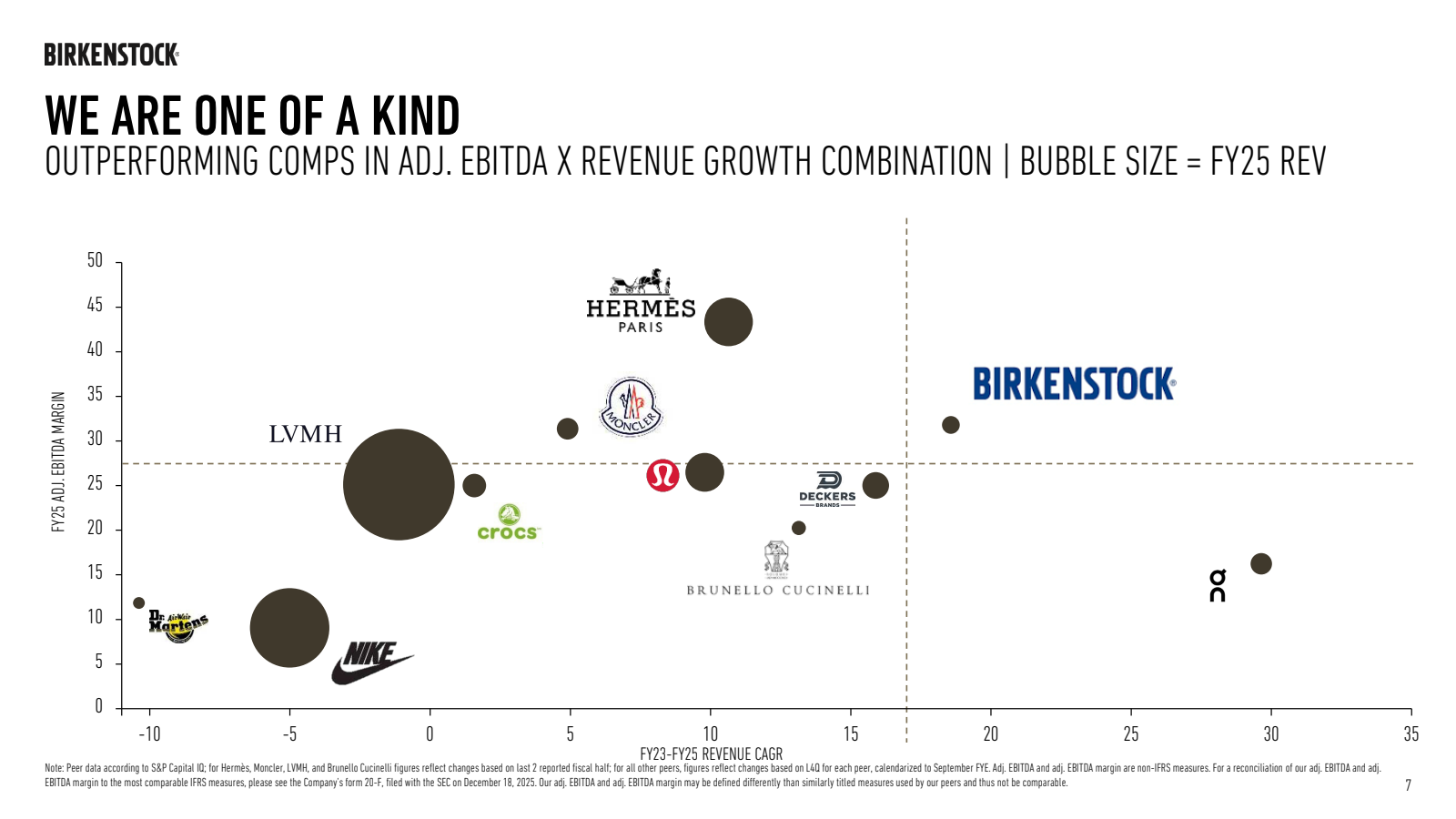
As mentioned earlier, with the sandal becoming more widely accepted, Birkenstock's consumer base has broadened (significantly). By the late 2010s, demand began to outpace German production capacity, and while Birkenstock invested in expanding output, its manufacturing model limited how quickly it could scale. At its 2026 CMD, Reichert stated that in higher-penetrated markets, the company intentionally leaves roughly 20% of demand unfilled and instead allocates those products to newer markets.
Birkenstock's manufacturing constraints and the scarcity that comes with them also shape the dynamics of its wholesale channel. When retailers know supply is limited and replenishment is not guaranteed, the incentive shifts away from discounting and toward preserving margins. The result is a high degree of price discipline for a brand that does not operate at a traditional luxury price point.
Birkenstock's CEO, Oliver Reichert, described the company's positioning at the Q4 FY 2023 earnings call:
"We are a unique business. We are neither luxury nor fashion or footwear, but our business model has elements that are typical of the luxury industry: a premium quality product, market scarcity, and the high desirability of the brand, which altogether translates into a premium margin. Other than the luxury industry, which is primarily built on price and social status, Birkenstock is a true purpose and zeitgeist brand.
As such, we are beyond fashion. Our disciplined engineered distribution model drives consistent and predictable revenue growth by strategically allocating products across channels and segments to maximize profitability and to balance demand and supply, to create scarcity in the market."
For most of its history, Birkenstock has been defined by its cork-latex footbed and minimalist, earthy-colored sandals. That identity has gradually broadened over the decades, building on Fraser's push to introduce a wider color palette in the 1980s. By 2023, the company had several hundred silhouettes, drawing on colors, materials, and stylistic details to keep expanding within its core designs.
The success on the West Coast and in other warm-climate regions highlights the obvious fact that Birkenstocks have historically been designed mostly for warmer weather. California and Florida have sandal season all year round, while Sweden and Japan only have a few months each year when Birkenstocks are a viable option. That is, if worn outside.
In recent years, the company has moved further into closed-toe shoes, boots, and professional footwear better designed for environments such as restaurants and hospitals. Birkenstock has partly described this as a deliberate hedge against seasonality and a way to broaden the product mix to capture more consistent demand across its markets. By FY 2021, the company was still mainly a sandals brand, with closed-toe styles accounting for roughly 15% of total revenue. Most recently, in FY 2025, that share has increased to approximately 38%.
Birkenstock has also widened the price architecture within single silhouettes. The Arizona now ranges from around €55 for the entry-level EVA version to roughly €500 for 1774 editions. The company has pointed to both of these strategies as key drivers of a higher average selling price, a broader target group, and expansion into new markets.
As stated, the widening of Birkenstock's price range has not only come from more expensive models. In 2015, the first EVA models were launched, expanding into a lighter, molded category at lower price points than many of its traditional sandals. The broader range now includes models such as the Arizona EVA and Birki Flow, which compete with many of the casual and lightweight products from companies such as Nike, Adidas, Crocs, and many others.
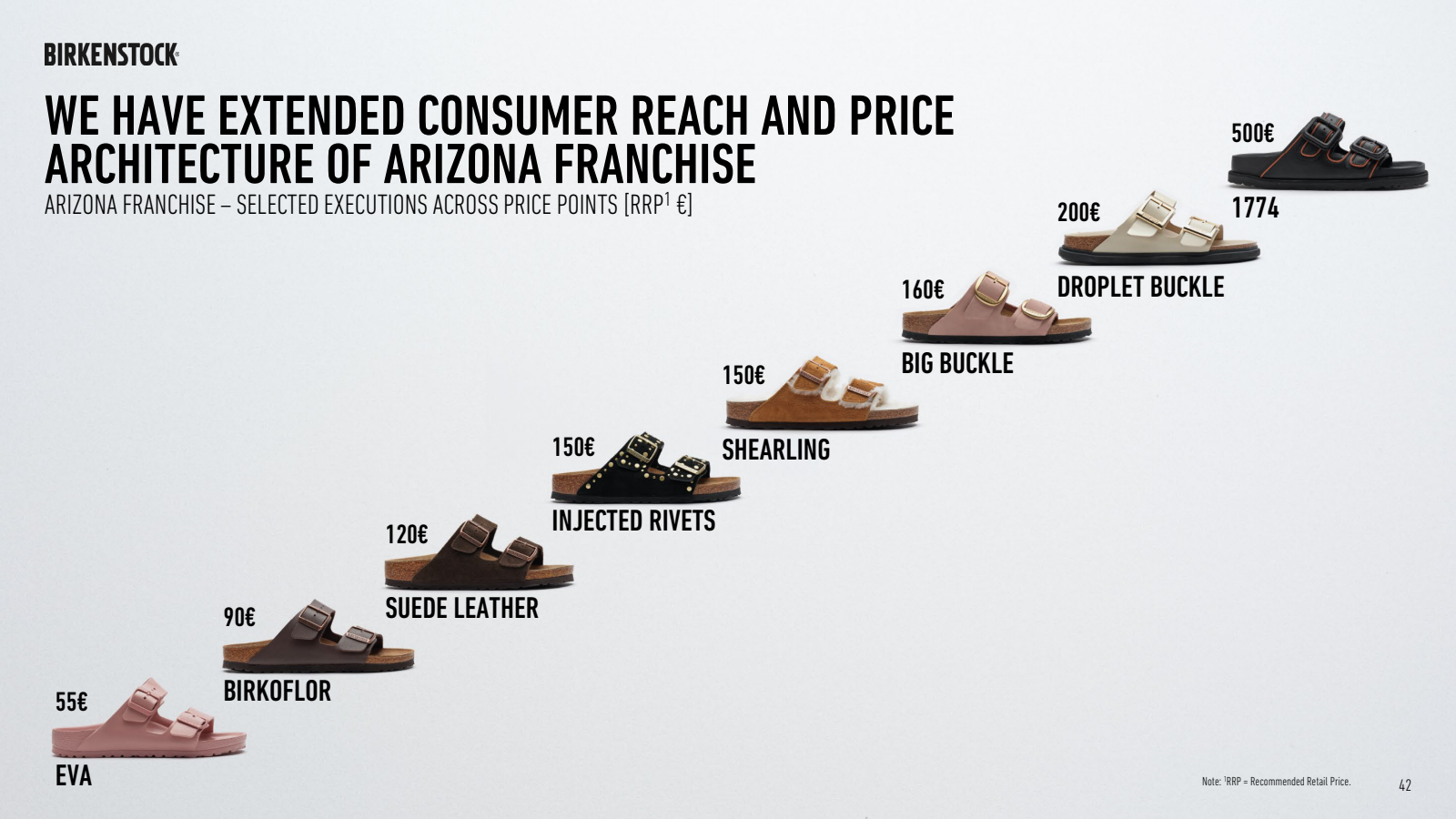
More than 90% of Birkenstock's products sell at full price across channels, a figure it views as an indicator of the brand's strength. In a footwear market where markdowns and end-of-season promotions are frequent, that is one of the clearest signs of its pricing discipline.
Birkenstock's timeless designs have remained stylish for years, which reinforces that confidence for retailers. What has been popular and unchanged for decades will likely still sell next season, rather than face the risks associated with shifting fashion trends. The company's CFO, Ivica Krolo, has explained that this forward-looking order visibility enables Birkenstock to plan production well in advance, improving efficiency across its vertically integrated supply chain.
This dynamic helps explain why Birkenstock's wholesale mix has remained stable. Over the past three years, wholesale has accounted for roughly 60% of revenue, with DTC (including the company's own e-commerce channels and retail stores) representing the remainder. Across most footwear businesses, brands seek to increase the DTC share over time because it typically yields higher margins. For Birkenstock, however, this trade-off isn't as straightforward as one might assume.
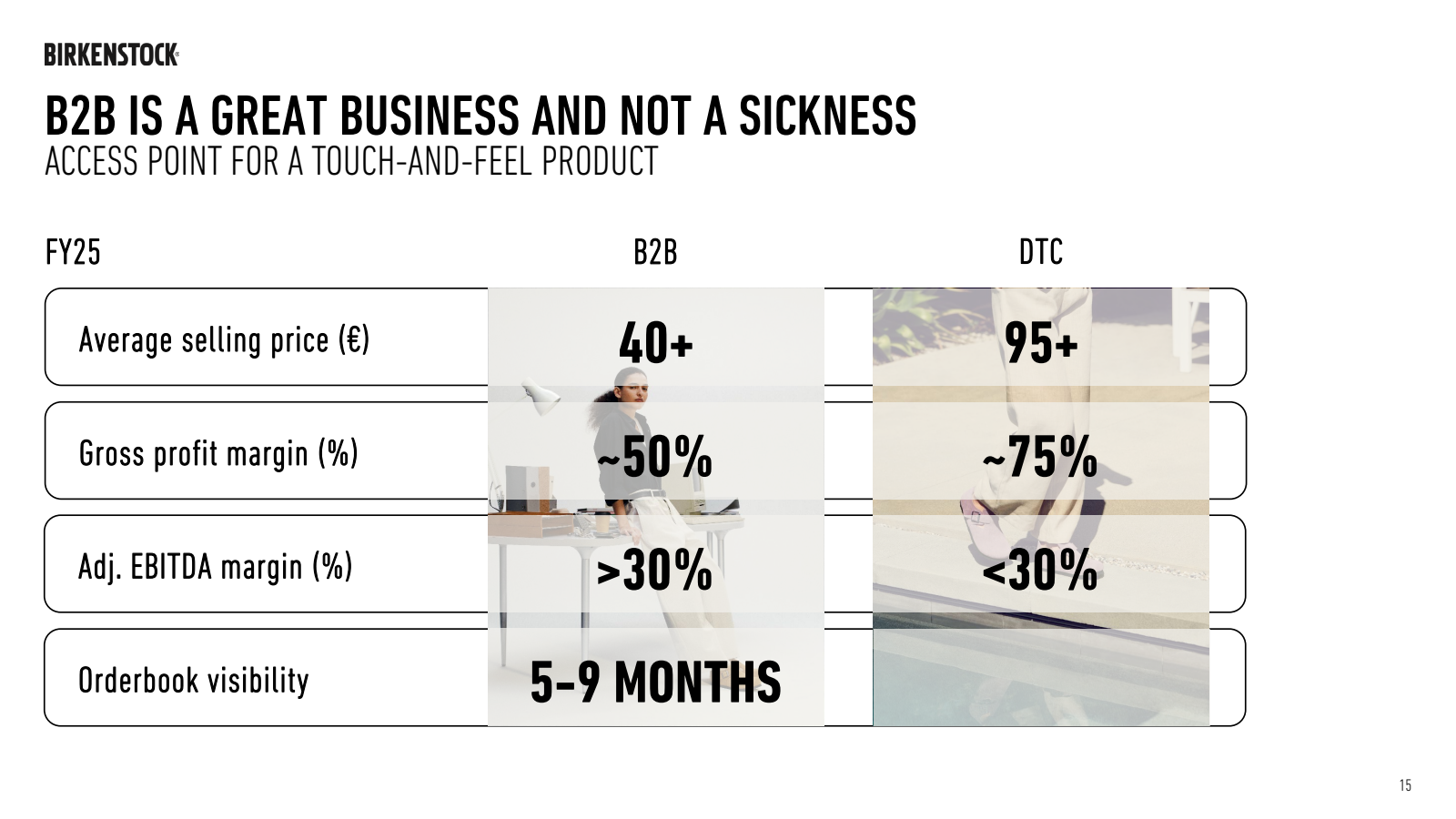
DTC offers global reach, a wider product mix, and a higher average selling price, offset by higher operating costs. Wholesale carries a lower average selling price, but that's balanced by lower operating costs. Since both channels produce similar adjusted EBITDA margins, Reichert has stated that the company has little incentive to actively push toward a higher DTC share, as other factors also come into play.
Birkenstock works with approximately 6,000 wholesale partners across more than 85 countries and operates over 100 of its own stores, together giving the brand a presence across roughly 19,000 retail locations. The network includes orthopedic specialists, major department stores, high-end fashion boutiques, and outdoor retailers. For a product category where fit and in-store trial have always mattered, these relationships remain central to the business.
Krolo highlighted the increasing importance of retail stores at the company's 2026 CMD:
"We see a shift in consumer behavior, especially the younger cohort, who are new to the brand, are choosing intentionally to purchase in-store in multi-brand environments. In general, this is a great thing for us because Birkenstock is a touch-and-feel product, a very haptic product. We are a sit-and-fit brand. People want to experience the quality of the product, and every single physical touchpoint with the brand does matter for us."
“Experience the quality” comes together with the brand's ability to attract and keep customers. Once a friend or family member starts wearing a pair of sandals, it often becomes a talking point, creating a natural introduction to the brand.
Birkenstock claims that more than 60% of its customers discover the brand through word of mouth, making existing customers one of its most powerful growth channels. And once someone adopts the brand, they tend to remain highly loyal: in the company's 2023 IPO filing, it reported that 86% of recent customers intended to repurchase and that the average U.S. customer owned 3.6 pairs of Birkenstock shoes.
Given Birkenstock's expansion in recent decades, you have most certainly encountered the iconic sandal at some point. However, looks can deceive. Because many of Birkenstock's core designs date back to the 1960s and 1970s, their design protections have long since expired, allowing countless brands to produce close-to-identical sandals and compete at lower price points.
The effort to combat these challenges has played out across several fronts. In 2017, Birkenstock stopped supplying Amazon and instructed its authorized retailers not to sell through the platform. The company's U.S. division had previously sold through its open marketplace but now argued that it had become too difficult to supervise, citing counterfeits and unauthorized sellers. Amazon's inventory-pooling practice, which mixes identical products from different sources, is widely seen as one mechanism that made these issues harder to control. As of 2026, however, the practice is being phased out.
Amazon's marketplace isn't the only channel that has caused problems. Counterfeits and unauthorized sellers have long been, and remain, major issues, but other uncontrolled channels also pose a threat to Birkenstock's pricing discipline. Over the past years, many of its products had been sold at significant discounts through low-price retailers, leading the company to impose similar restrictions across those channels. Birkenstock's wholesale agreements had established clear conditions on where, how, and at what price its products could be sold, but those had evidently become more difficult to enforce beyond the initial sale.
As mentioned, Birkenstock's original design rights protecting models such as the Arizona and Madrid have expired years ago. In an attempt to extend protection through copyright, the company turned to Germany's Federal Court of Justice, arguing that the sandals were works of applied art, a status that could protect them for decades to come.
In 2025, the court rejected Birkenstock's claim, concluding that the sandals were primarily shaped by their orthopedic function rather than artistic creativity. As a result, competitors remain free to produce similar-looking sandals under their own brands across Germany and the EU. Birkenstock continues to pursue imitators by other legal routes in the U.S. and other markets but has yet to succeed.
Protecting the brand comes at a cost, but imitation itself and the very existence of Fakenstocks are a testament to how desirable Birkenstocks have become.
For nearly two centuries, the Birkenstock family built a legacy and expertise around the footbed. But it was only in 1963, when that footbed was embedded in a sandal, that everything changed. Since then, the product range has expanded into hundreds of variations around it without changing the footbed itself or the commitment to quality made in Germany. The brand was once dismissed but is now appreciated by millions. Whether that's despite its design or thanks to it, we'll leave it for you to decide.
Explore our platforms
Leading companies and financial institutions worldwide rely on Quartr to make better decisions faster.
Desktop
API
)
)
)